Future Dispatch
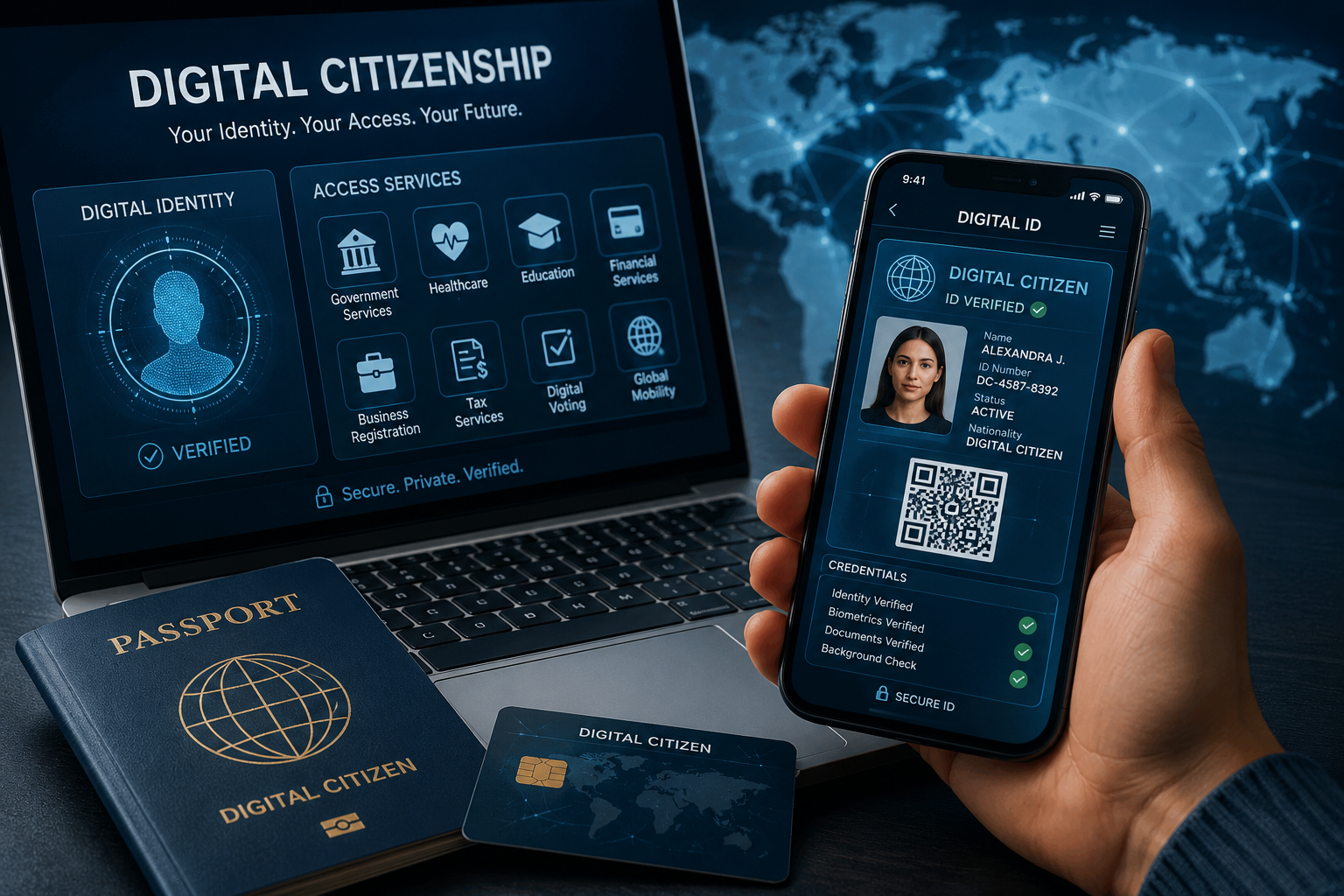
Several nations introduce official digital citizenship programs, allowing verified individuals to access government services, financial systems, healthcare records, education platforms, and legal identity tools through secure digital credentials.
A growing number of countries have officially launched digital citizenship programs, marking a major shift in how governments define identity, residency, and access to public services.
Unlike traditional citizenship, which is tied primarily to physical borders, digital citizenship allows verified individuals to interact with a nation’s institutions through secure online identity systems. Citizens and approved digital residents can file documents, access healthcare records, open financial accounts, register businesses, vote in limited digital referendums, and interact with government agencies without being physically present.
The first major wave of adoption begins as governments modernize outdated identity systems and respond to the increasing mobility of remote workers, entrepreneurs, international students, and digital nomads. Instead of relying on paper documents, passwords, and fragmented databases, digital citizens use encrypted identity credentials linked to biometric verification and decentralized security protocols.
Supporters argue that digital citizenship reduces fraud, speeds up government services, expands economic participation, and gives individuals greater control over their personal records. Small nations in particular begin using digital citizenship programs to attract entrepreneurs, investors, and skilled workers who may never physically relocate but still contribute economically.
Critics raise concerns about privacy, surveillance, cybersecurity, and unequal access. Civil liberties organizations warn that digital identity systems could become powerful tools for tracking individuals if not governed by strict transparency and privacy rules.
Despite those concerns, adoption accelerates as international standards emerge. Banks, universities, healthcare systems, and tax agencies begin recognizing verified digital citizenship credentials across borders. What begins as a convenience gradually becomes a new layer of global identity infrastructure.
By the mid-2030s, digital citizenship is no longer viewed as experimental. It becomes a normal part of government modernization, especially in countries competing for global talent, remote business formation, and secure digital commerce.
OrinVey Assessment
Digital citizenship would represent a major evolution in the relationship between individuals and governments. If implemented responsibly, it could make public services faster, identity verification more secure, and cross-border participation easier. If implemented poorly, it could create new risks around surveillance, exclusion, and centralized control. This forecast is highly plausible because governments, banks, and technology companies are already moving toward stronger digital identity systems.