Future Dispatch
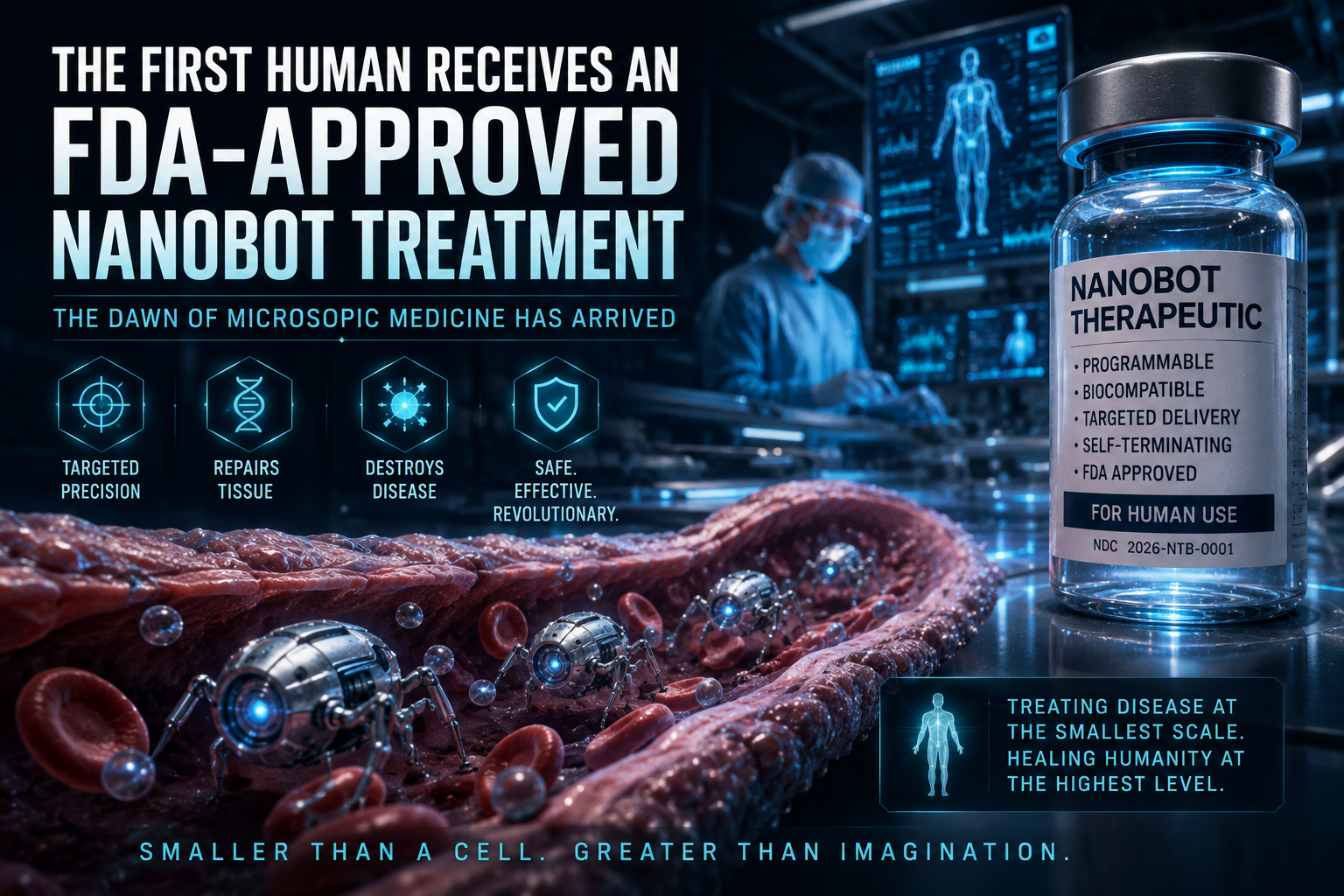
The first FDA-approved medical nanobots successfully treat a patient by repairing damaged tissue and destroying disease from within the bloodstream. The milestone marks the beginning of programmable microscopic medicine capable of performing procedures once impossible through conventional drugs or surgery.
In one of the most significant medical breakthroughs of the twenty-first century, physicians have successfully treated a patient using the world’s first FDA-approved therapeutic nanobots, ushering in a new era of precision medicine.
The microscopic robotic devices, each thousands of times smaller than the width of a human hair, were injected directly into the patient’s bloodstream, where they autonomously navigated the circulatory system to locate diseased tissue. Guided by artificial intelligence and advanced molecular sensors, the nanobots identified damaged cells, delivered targeted therapies, repaired microscopic injuries, and safely exited the body after completing their mission.
Unlike conventional medications, which circulate throughout the body and often affect healthy tissue, the nanobots performed their work with extraordinary precision, minimizing side effects while dramatically improving treatment effectiveness.
The approval follows decades of research in nanotechnology, biotechnology, robotics, and artificial intelligence. Scientists overcame longstanding challenges involving power generation, biocompatibility, navigation, communication, and safe removal of microscopic devices from the human body.
Clinical trials demonstrated unprecedented success in treating several forms of cancer, arterial plaque buildup, internal bleeding, and localized infections. Physicians reported shorter recovery times, fewer complications, and substantially improved long-term patient outcomes compared to traditional therapies.
Hospitals around the world quickly begin establishing nanomedicine departments staffed by physicians, engineers, and AI specialists trained to design personalized treatment protocols. Pharmaceutical companies increasingly shift investment toward programmable therapeutic systems capable of adapting to individual patients rather than producing one-size-fits-all medications.
Researchers believe the technology’s future applications extend far beyond disease treatment.
Future generations of nanobots are expected to continuously monitor blood chemistry, repair damaged blood vessels before symptoms appear, remove dangerous cholesterol deposits, accelerate wound healing, eliminate antibiotic-resistant bacteria, and even perform microscopic surgical procedures without incisions.
Military organizations begin exploring battlefield applications capable of stabilizing traumatic injuries within minutes. Emergency medicine specialists anticipate using nanobots to prevent stroke damage, halt internal bleeding following automobile accidents, and rapidly neutralize toxins before permanent injury occurs.
Regulatory agencies establish new international safety standards governing nanomedical devices, cybersecurity protections, manufacturing quality, and long-term biological monitoring. Medical ethicists also begin addressing concerns regarding privacy, enhancement technologies, and potential non-medical uses of programmable microscopic machines.
Although the first treatments remain expensive and available only at specialized medical centers, manufacturing advances steadily reduce costs. Within a decade, experts predict nanobot therapies will become routine for many common diseases, fundamentally changing the practice of medicine.
Historians later compare the approval of medical nanobots to the introduction of antibiotics, vaccines, and MRI technology—not simply because they improved healthcare, but because they permanently changed how physicians diagnose, treat, and prevent disease.
⸻
OrinVey Assessment
FDA-approved medical nanobots would represent one of the greatest technological achievements in healthcare history. By combining artificial intelligence, nanotechnology, robotics, and biotechnology, physicians could treat disease with a level of precision previously unimaginable. While considerable engineering and regulatory challenges remain, ongoing advances suggest programmable microscopic medicine is becoming increasingly feasible. If realized, this milestone would shift healthcare from treating illness after symptoms appear to repairing the human body at the cellular level before disease can take hold.